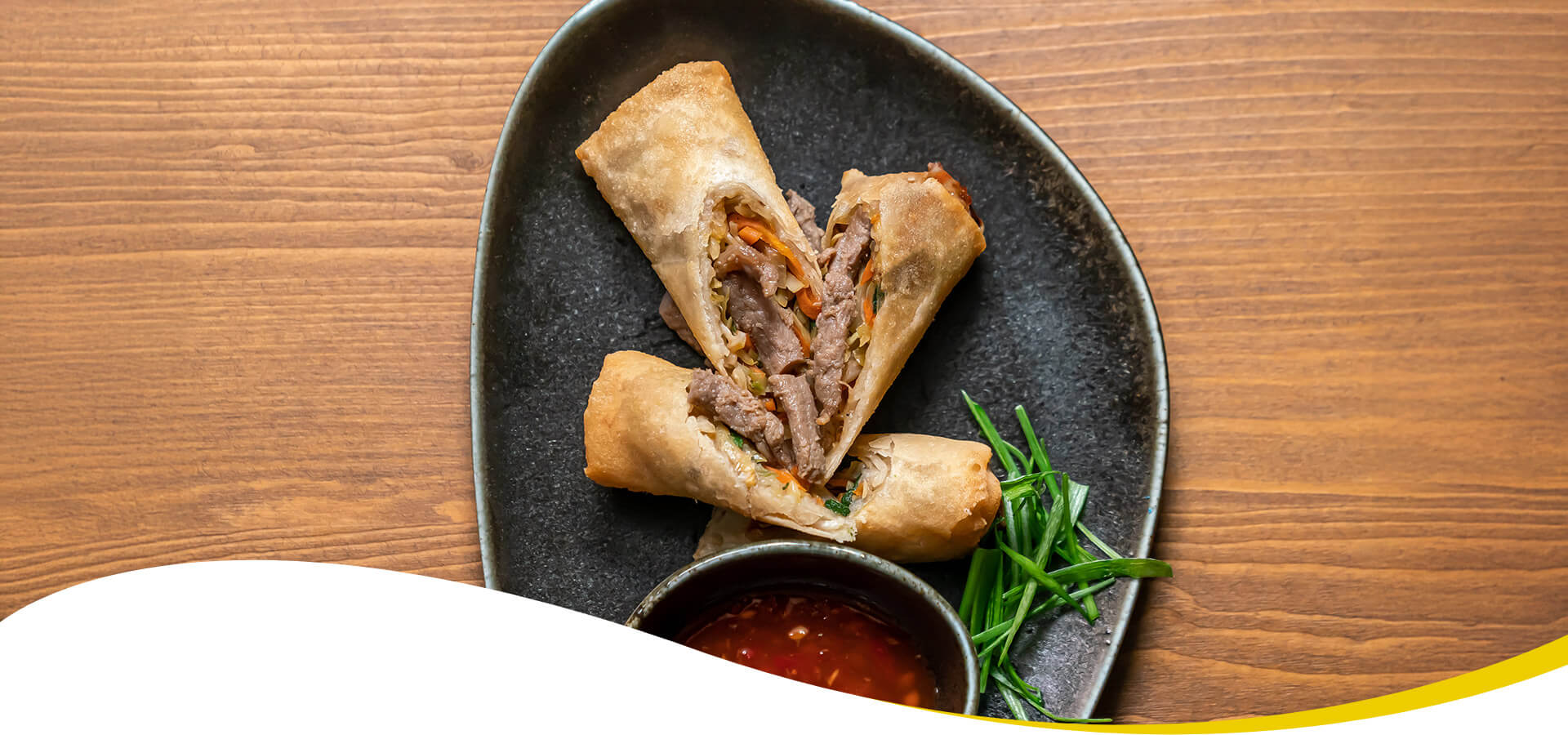
You’re at a bar, maybe a Disney park, or a high-end appetizer spot, and you see them. Cheeseburger spring rolls. It’s a weird concept if you think about it too hard, basically a classic American drive-thru staple wearing a crispy, translucent tuxedo. They’re crunchy. They’re salty. They’ve got that molten, neon-yellow cheese that somehow defies the laws of physics. But when you try to recreate a cheeseburger spring rolls recipe at home? Total disaster. Usually, the grease from the beef turns the wrapper into a sad, oily wet paper towel before it even hits the plate. Or worse, the whole thing explodes in the air fryer like a tiny, savory grenade.
It shouldn’t be this hard. Honestly, the secret isn’t some high-tech culinary technique; it’s just moisture management. If you don’t drain your meat like your life depends on it, you’re doomed. I’ve seen people throw raw onions and pickles straight into the mix, wondering why the steam turns their spring rolls into mush. Stop that. We need to talk about how to actually build these things so they stay shattered-glass crispy while keeping that "Big Mac" soul intact.
Why Your Cheeseburger Spring Rolls Recipe Usually Fails
The physics of a spring roll wrapper are pretty unforgiving. These thin sheets of wheat flour and water are designed to crisp up instantly when they hit heat, but they’re also incredibly porous. If you’ve got a filling that’s leaking fat or water, that liquid is going to soak into the dough before the heat can evaporate it. You end up with a leathery, chewy mess.
Most people use 80/20 ground beef because, yeah, fat is flavor. In a burger, that’s correct. In a spring roll? It’s a liability. When you’re prepping your cheeseburger spring rolls recipe, you actually want to lean toward a 90/10 blend, or you need to be aggressive with the colander. I’m talking about letting that cooked beef sit and drip for ten minutes, then patting it down with paper towels. It sounds like overkill. It isn't.
Then there’s the cheese. If you use shredded cheddar from a bag, you’re dealing with potato starch or cellulose—those anti-caking agents. They make the cheese melt weirdly inside a confined space. You want American cheese. I know, food snobs hate it. But for this specific application, the emulsifiers in processed American cheese (like Sodium Citrate) are exactly what keep the filling creamy instead of separating into a pool of oil and a clump of protein.
The Ingredient Breakdown (No Fluff)
Forget the "pinch of this" and "dash of that" for a second. Let's look at what actually goes into a high-performing cheeseburger spring rolls recipe. You need a pound of lean ground beef. You need yellow mustard—don't get fancy with Dijon here, it’s too sharp. You need finely diced white onions, but you have to sauté them with the beef so they lose their water content.
- The Wrappers: Use the frozen "Spring Roll Pastry" found in Asian markets (usually the TYJ brand), not the thick, bubbly egg roll wrappers found in the grocery store produce aisle. Big difference.
- The Glue: A simple slurry of one tablespoon cornstarch and two tablespoons water. Flour and water works too, but cornstarch dries harder.
- The Tang: Finely chopped dill pickles. Don't use relish; it’s too sugary and wet. Chop actual spears and, again, squeeze them in a paper towel.
- The Seasoning: Lawry’s Seasoned Salt or a mix of salt, pepper, and garlic powder.
The "Disney" Factor
If you’ve ever had these at the Magic Kingdom, you know they have a specific, almost sweet-and-savory profile. That comes from a tiny bit of sugar in the beef seasoning and a very heavy hand with the pickles. Some people try to put lettuce inside. Don't do that. Lettuce turns into a hot, slimy green ribbon of sadness when fried. Keep the lettuce on the side as a garnish or part of the dipping sauce.
Let’s Actually Build This Thing
Start by browning your beef with the onions. As the fat renders out, use your spatula to break that meat into tiny, tiny pebbles. Large chunks are the enemy of a tight roll. Once it’s browned, drain it. Drain it again.
Now, mix in your mustard, a splash of Worcestershire sauce, and your chopped pickles while the meat is still warm but not screaming hot. If the meat is too hot when you add the cheese, the cheese will melt and disappear into the beef. You want to wait until the meat is just warm, then fold in small squares of American cheese. This ensures you get "pockets" of cheese rather than just orange-tinted beef.
Lay your wrapper in a diamond shape. Put about two tablespoons of filling on the bottom third. Fold the bottom corner up, tucking it tightly under the meat. Fold the sides in. It should look like an open envelope. Roll it up toward the top corner, brushing that cornstarch slurry on the final edge to seal it.
Pro tip: Don't overfill. It’s tempting. But an overfilled spring roll is an exploded spring roll.
Air Frying vs. Deep Frying
Look, deep frying is better. We all know it. The immersion in 375°F oil creates a uniform, golden-brown crust that stays crunchy for twenty minutes. If you’re deep frying, do it in batches of three or four. Don't crowd the pot or the temperature will drop, and your rolls will just sit there absorbing oil like a sponge.
But I get it, cleaning up oil is a nightmare. If you’re using an air fryer for your cheeseburger spring rolls recipe, you have to be tactical. Spray the rolls generously with an oil mister (avocado or grapeseed oil works best). If they look dry and floury, they will taste dry and floury. Air fry at 400°F for about 8 to 10 minutes, flipping them halfway through. They won't have that translucent, bubbly sheen of a deep-fried roll, but they’ll be plenty crunchy.
The Sauce That Makes It Work
You can’t just serve these with plain ketchup. Well, you can, but it’s boring. The "Secret Sauce" is what bridges the gap between a snack and a meal.
Mix a half-cup of mayonnaise with two tablespoons of ketchup, a teaspoon of yellow mustard, and a tablespoon of finely minced pickles. Add a pinch of smoked paprika and a drop of white vinegar. This mimics the classic burger spread. If you want to get weird—and I recommend it—add a teaspoon of the brine from a jar of pickled jalapeños. It cuts through the richness of the fried wrapper and the cheese.
Common Mistakes and Why They Happen
I’ve seen people try to use wonton wrappers. Just... no. Wonton wrappers are thicker and doughier; they’re meant for steaming or boiling as much as frying. They’ll work in a pinch, but you won't get that "shatter" effect.
Another mistake? Not chilling the filling. If your filling is room temperature or slightly warm, the heat from the meat starts to soften the wrapper from the inside out before you even get it to the stove. If you have the time, put your beef mixture in the fridge for 30 minutes before you start rolling. Cold filling + hot oil = crispy perfection. It’s a basic thermodynamic principle that most home cooks ignore.
Real Talk on Health and Variations
Let’s be honest: nobody is eating cheeseburger spring rolls for the vitamins. It’s a heavy, indulgent snack. However, if you're trying to make this slightly less of a gut punch, you can swap the beef for ground turkey. If you do that, you must add a teaspoon of beef bouillon base (like Better Than Bouillon) to the turkey, or it will taste like absolutely nothing.
For a vegetarian version, those "Impossible" or "Beyond" crumbles actually work shockingly well here because they have a high fat content that mimics the mouthfeel of a burger. Just treat them exactly like the beef—brown them, drain them (though they usually have less render), and season heavily.
Storage and Reheating
If you have leftovers, do not put them in the microwave. I’m begging you. The microwave turns the wrapper into a gummy, rubbery ring of despair. Use a toaster oven or the air fryer at 350°F for about four minutes. They’ll come back to life almost perfectly. You can also freeze these raw! Just lay them out on a baking sheet so they aren't touching, freeze until solid, then toss them into a freezer bag. You can fry them straight from frozen; just add two minutes to the cooking time.
Actionable Next Steps for Success:
- Buy the right wrappers: Head to an Asian grocery store and look for the "Spring Roll Pastry" (flour-based), not the "Egg Roll Wrappers" (egg-based) found in standard supermarkets.
- Aggressively drain the meat: Use a fine-mesh strainer and let the cooked beef sit for at least 10 minutes to remove all excess grease.
- Chill your filling: Put the seasoned beef and cheese mixture in the refrigerator for 20-30 minutes before rolling to prevent the wrappers from getting soggy during the assembly process.
- Seal it tight: Use a cornstarch and water slurry rather than just plain water to ensure the rolls stay closed during the high-heat cooking process.
- Test your oil: If deep frying, drop a small piece of wrapper into the oil; if it doesn't sizzle and rise to the top instantly, your oil isn't hot enough.